
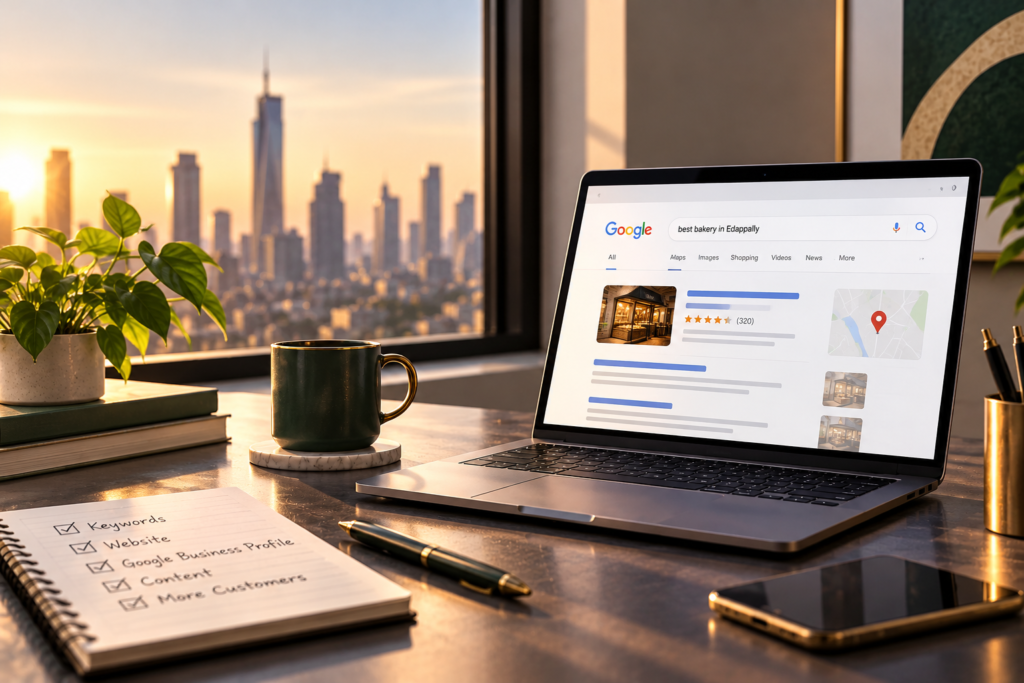
Imagine running a small business, working hard to serve your customers, but still losing potential clients to competitors who appear on Google. Even if your products or services are excellent, people may not discover your business if it is difficult to find online.
This is where search engine optimisation (SEO) helps.
You don’t need a large marketing budget or expensive tools to get started. By understanding what your customers search for, improving your website and sharing useful information, you can gradually build your online visibility.
In this guide, we’ll explore ten practical SEO tips, free tools and a simple 30-day action plan to help small businesses improve their Google rankings.
What is SEO and Why it is Important?
Search engine optimisation is the process of improving your website so search engines can understand, index and display its pages in relevant search results.
For example, someone searching for a photographer in Kochi may find your business through Google and become a customer. Appearing in relevant search results helps potential customers discover your services without paying for every click.
SEO takes time, and no one can guarantee specific rankings. However, consistent improvements can strengthen your online presence and help attract relevant visitors.
10 Tips to Improve Your Google Rankings
1. Choose the Right Keywords
Start by understanding what your customers search for when looking for your products or services. Customer enquiries, emails and messages can provide useful keyword ideas.
You can also use Google search suggestions, Google Keyword Planner, Google Trends and Google Search Console.
Be specific when choosing keywords. A search for “bakery” is broad, while “vegan bakery in Edappally” shows a clearer intention. Relevant, specific phrases can help you reach people who are more likely to become customers.
2. Understand Search Intent
Every search has a purpose. Someone searching for “how to choose a wedding photographer” probably wants advice, while someone searching for “wedding photographer near me” may be ready to book.
Search your target keyword on Google before creating content. Look at the types of pages that appear and create content that meets the searcher’s needs.
3. Optimise Titles, Descriptions and URLs
Every important page should have a unique, descriptive title that clearly communicates its topic. Write a concise meta description that encourages people to visit your website, although Google may display different text.
Use a clear heading structure with one main heading and relevant subheadings. Keep URLs short and readable, such as `/emergency-plumbing-services`.
These simple improvements make your pages easier for visitors and search engines to understand.
4. Publish Helpful Content
Useful content gives people a reason to visit your website and builds trust in your business.
Create detailed service pages explaining what you offer, who you serve and where you operate. Answer common customer questions and publish practical guides related to your industry.
For example, a roofing company could write an article about choosing a reliable roofing contractor and explain typical pricing factors.
Write for people first and include keywords naturally. Focus on answering questions clearly rather than publishing content just to fill your website.
5. Optimise Your Google Business Profile
For eligible local businesses, a free Google Business Profile can help you appear on Google Maps and in local search results.
Complete your profile with accurate business details, opening hours, categories and services. Add genuine photographs and respond politely to customer reviews.
You can also ask satisfied customers to leave honest reviews. Never buy reviews or create fake ones.
Google considers relevance, distance and prominence when determining local results. Keeping your profile accurate and active can help potential customers discover your business.
6. Keep Business Information Consistent
Your business name, address and phone number should match across your website, Google Business Profile and relevant online directories.
Inconsistent information can confuse customers. You don’t need hundreds of directory listings; focus on accurate information across trustworthy and relevant platforms.
7. Make Your Website Mobile-Friendly
Many customers browse websites on their phones, so your website should be easy to use on smaller screens.
Check whether pages load quickly, text is readable, buttons work properly and navigation is simple. Make sure your website uses HTTPS and that important pages can be accessed by search engines.
Google PageSpeed Insights is a useful free tool for identifying performance issues. Improving the user experience benefits visitors as well as your business.
8. Earn Quality Backlinks
A backlink is a link pointing to your website from another. Links from relevant, trustworthy websites can help people discover your business and support your SEO efforts.
Consider joining local business associations, participating in community events or publishing useful resources that others may want to reference.
You could also contribute expert advice to local blogs or industry websites. Avoid buying backlinks or participating in link schemes that violate Google’s spam policies.
9. Connect Related Pages With Internal Links
Internal links connect different pages on your own website. They help visitors explore related information and help search engines discover your content.
For example, a kitchen renovation service page could link to an article about choosing countertops. That article could then link back to your renovation services.
Use descriptive link text so visitors understand what they will find when they click.
10. Track Your SEO Performance
SEO improvements are difficult to evaluate without measuring results.
Google Search Console shows how your website performs in Google Search, including impressions, clicks and search queries. Google Analytics helps you understand what visitors do after reaching your website.
Review the data regularly to identify successful pages and areas that need improvement. Focus on attracting relevant visitors and generating enquiries, not just increasing traffic.
A Simple 30-Day SEO Action Plan
You can begin improving your website with a few manageable tasks each week.
Week 1: Research and setup
– Set up Google Search Console and Google Analytics.
– List 15–20 customer questions and relevant search phrases.
– Verify your Google Business Profile if eligible.
– Identify your five most important website pages.
Week 2: Improve your website
– Test important pages using PageSpeed Insights.
– Check the mobile experience.
– Improve page titles, descriptions and headings.
– Fix broken links and unclear URLs.
Week 3: Create better content
– Improve one existing service page.
– Publish one useful page targeting a clear search intent.
– Add internal links between related pages.
– Upload genuine business photographs to your profile.
Week 4: Review and improve
– Check business details across your online listings.
– Request honest reviews from satisfied customers.
– Review impressions, clicks and search queries in Search Console.
– Choose three priorities for the following month.
Adjust the schedule to fit your workload. Consistent progress matters more than completing everything at once.
Free SEO Tools for Small Businesses
You can handle many basic SEO tasks with free Google tools.
– Google Search Console: Monitor search performance, clicks, impressions and indexing issues.
– Google Analytics: Understand website visitors and track conversions after proper setup.
– Google Trends: Compare search interest and identify seasonal patterns.
– Google Keyword Planner: Discover keyword ideas, although search volumes may appear as ranges.
– PageSpeed Insights: Check page performance and identify possible improvements.
Each tool has limitations, but together they provide a useful starting point without requiring a large budget.
Common SEO Mistakes to Avoid
Avoid repeating keywords excessively, copying content from other websites or buying cheap backlink packages. These practices can harm content quality and may violate Google’s spam policies.
Don’t ignore mobile usability, either. A website that is difficult to navigate can discourage potential customers from contacting you.
Finally, don’t expect overnight results. SEO improvements can take weeks or months to become visible. Monitor progress over time and continue improving your website.
How to Measure SEO Progress
Look beyond individual ranking positions. Track these important metrics:
– Impressions: How often your pages appear in search results.
– Clicks: How often people visit your website from search results.
– Click-through rate (CTR): The percentage of impressions that result in clicks.
– Organic traffic: Visitors who arrive through unpaid search results.
– Leads: Enquiries, phone calls and form submissions.
– Conversions: Completed actions, such as bookings or purchases.
Review these metrics monthly and compare them with previous periods to understand whether your changes are helping.
Frequently Asked Questions
How long does SEO take to work for a small business?
Results vary depending on competition, website quality and the improvements you make. Some changes may appear quickly, while meaningful progress can take several months. Focus on consistent improvements rather than guaranteed deadlines.
Can I do SEO myself without hiring an agency?
Yes. You can handle keyword research, basic website optimisation, content creation and performance tracking using free tools. Professional support may be helpful for complex technical problems or highly competitive markets.
Do I need a Google Business Profile to rank locally?
No. Your website can appear in Google Search without one. However, eligible local businesses can benefit from a Business Profile because it helps customers discover them through Google Maps and local search results.
Conclusion
Improving SEO for small businesses doesn’t require a huge marketing budget. Start by understanding your customers, choosing relevant keywords, publishing helpful content and keeping your website easy to use.
Optimise your Google Business Profile if eligible, earn trustworthy backlinks and measure your progress regularly. Most importantly, focus on helping people find the information or services they need.
You don’t have to do everything today. Start with two or three improvements, such as setting up Google Search Console, updating your page titles or completing your Business Profile. Build from there as you learn what works.
The digital world is evolving, and there’s always something new to discover.
Let’s connect and explore how SEO, creativity, strategy, and technology can help businesses grow online.